Hi there. I’m from Ireland and I can’t drive.
That might not sound like a big deal to you where you are from, but here, it can be debilitating. What with the steady rise in the cost of public transport, which (with relatively few exceptions) only really goes through big towns and cities that can have what seem like vast expanses of countryside snaked through with winding roads, cars are often the vehicle of least resistance in getting from one place to another.
Therefore, without one, you might end up stuck in the one place indefinitely…going crazy with boredom in the process. Unless you want to walk everywhere, of course. Which might be ok if you are more confident in your physical fitness, don’t get bored and frustrated with it, and have shoes you don’t want to have to replace right now.
So, when I learned about electric bikes, I finally saw a glimmer of hope for me. Here, I thought, might be a way out of my current practical lack of personal wheeled, motorised mobility that every other adult in this country seems to be able to take for bloody granted (wow, that…escalated, sorry) as well as a way to gradually get back to some level of fitness that didn’t involve the growing monotony (not to mention foot pain) of walking. (Yeah, running is not my thing either.)
Add the increasing anger and despair at the cost of getting to drive here (the insurance alone, ugh, don’t get me started), and it seemed like the ideal way out. Sure, I still wouldn’t be able to go out in the rain, but…do not want in any case, to be honest.

Ah, but this is all still going on in my life, which means a giant catch, of course. Every decent model I researched, from the obvious-choice Bromptons to even the higher-end Fiidos (even the new X Lite) are, oh so inevitably, out of my price-range. (Well, I did decide to be a full-time remote-working writer/blogger in 2021 after all, when, you know, everyone else also is.) Therefore, I felt obliged to set my sights elsewhere on the market, and hope one of the models with more obscure names often seen on sites like Banggood could work out.
In all honesty, the number of e-bikes at sub-US$1000 prices (definitely the range I am in) never ceases to amaze me. Obvious front-runners include those of the FIIDO D series, such as the D2S, D4S or newer D11. They tend to pop up most often in YouTube reviews and so on, although there are similarly-priced and spec’d models out there. They include the Samebike range, as well as those from Laotie – on that note, I have also become interested in the D4S Pro, which is a Laotie x FIIDO collaboration, apparently.
These bikes have similar power and range: for example, the D2S has a 36 volt (V) motor rated to output 250 watts (W), charged with a 7,800 milliamp-hour (mAh) battery (for context, the average 2021 smartphone battery is ~4,000mAh). It should allow the bike to achieve a top speed of 25 kilometers an hour (or ~15 miles per hour (mph)) and run on said motor for up to 50km per charge (which might take up to 5 hours). However, that range is slated to apply when the rider’s own pedalling is augmented by the bike’s motor (often termed power-assisted (or PAS) mode on online spec sheets). If one doesn’t pedal at all and uses it as something like a moped (which, frankly, is part of the attraction of the whole concept for me under certain circumstances), it might only go under power for 30km or less.
The D4S Pro, on the other hand, has an 11,600mAh battery, which might boost the bike’s range to as much as 90km (in PAS mode). It also, frankly, has slightly better design – they even have an on-board pump that is stored in its saddle-tube – also a feature of the popular HIMO Z20 (making its often high price a particular shame).
Back to the D4S Pro: it even has mudguards as standard. That brings me to a major issue I have with the FIIDO brand: it may stand out with its attractive starting prices, but even fairly basic aspects of biking are additional purchases – mudguards included. They can cost up to US$40, thus putting a significant ding into the bargains they seem to make on first glance. Furthermore, FIIDO bikes never have racks, and, again, they can be pricey.
However, I ultimately decided to pass over the D2S (despite its increasingly entry-level price as time goes on) as it has 16-inch wheels. I’m far from the tallest blogger on the internet, but that seemed too…kiddie…even for someone as short as me. In addition, its gear-chain on the back wheel is worryingly close to the ground, which is why I also chose not to go with the ADO A16.
On that note, I couldn’t have chosen a stranger brand name (“A Dece Oasis”?…ok, ADO) to go with in the end. I ordered the A20 – which, as the name suggests, is the 20-inch wheel counterpart of the A16. I was initially happy with the order, having grabbed a good price as the bike had only just launched at the time. I was also enamoured with the design: for some reason, its frame – which handily contains the battery – with its plain black color was appealing, with its solid-spoke wheels. It is also one of the folding e-bikes I looked at, which I like for the sake of space-saving and ease of transport overall.
However, this actually proved part of its eventual downfall. When the bike arrived, I found that the front fork’s head tube was off-centre relative to the handlebars, as was the moulding at the bottom of the head lock. The bike definitely didn’t look like that in the product description, and the defect made its real-life counterpart look lacking in build quality. Besides that, it had a strange metallic whining noise coming from something in the front wheel out of the box, and no amount of adjustment could fix it. Finally, a free phone-holder offered free with the bike turned up loose in the main shipping box & broken.
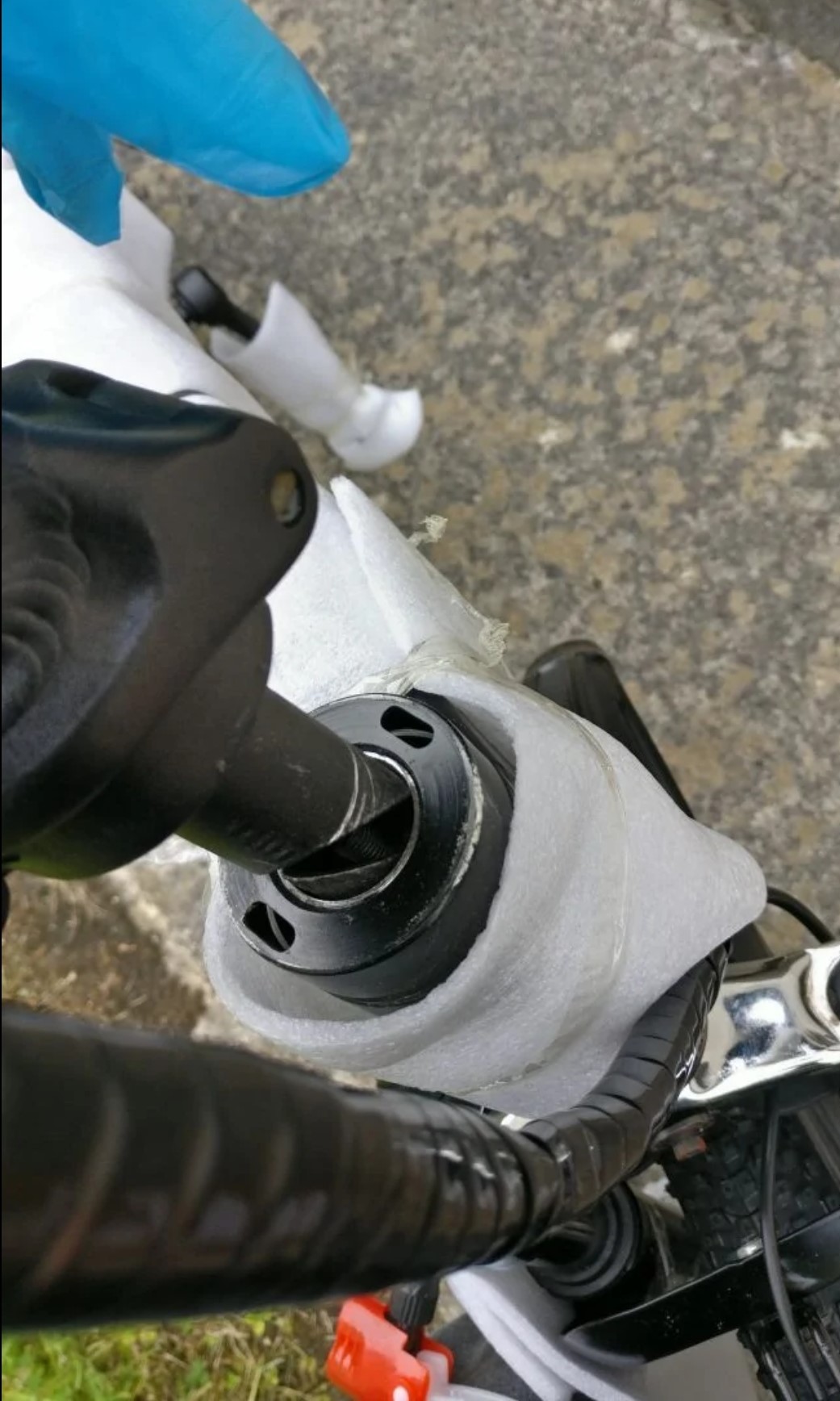
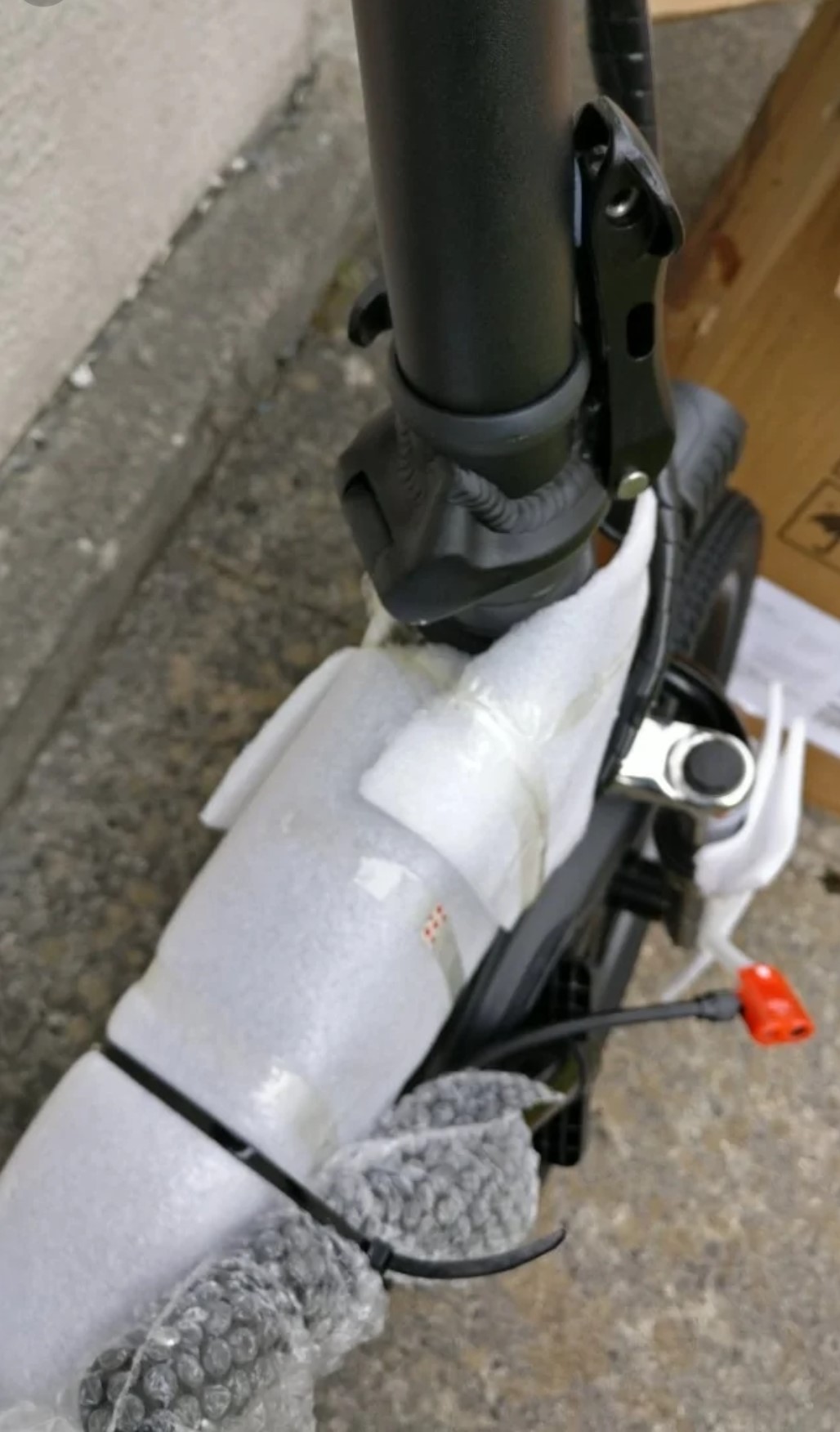
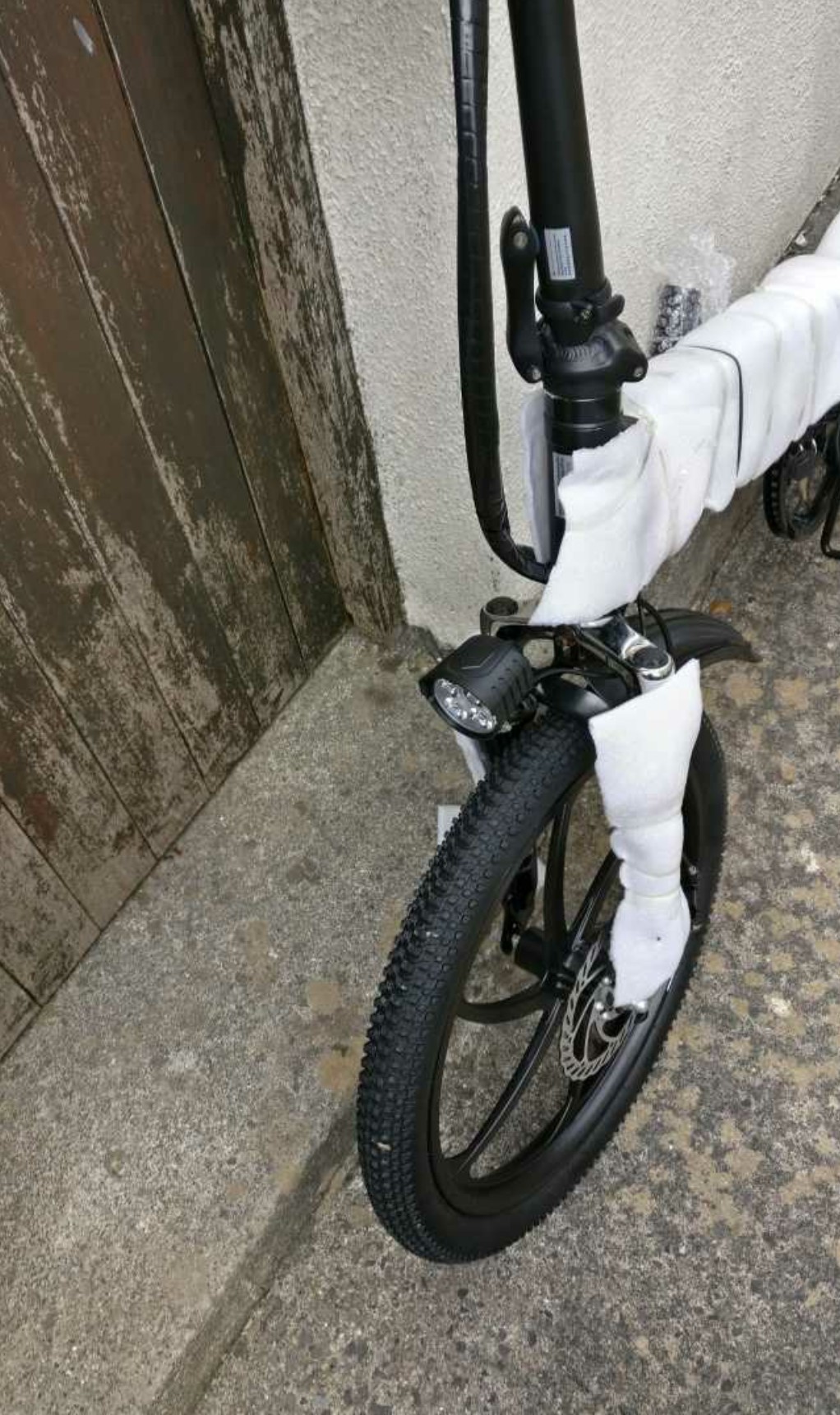

Luckily, Banggood’s customer service couldn’t have been more amenable and co-operative when I brought these issues to their attention. However, I ultimately opted for a return and a full refund rather than a replacement, as I couldn’t face the potential disappointment of another unit showing up with the same issues. So, I went back to the drawing board and started researching alternatives.
Which ultimately led me to this: the NAKXUS 20F039. It was not quite like the others I now felt familiar with – for example, it was the only one I could find with both a bike-rack and mud-guards as standard. It was also the only one I encountered without reviews on its Geekbuying site – nevertheless, I went with the impulse to order it. What?! Had I made another heart-rending mistake?
Almost immediately, the answer seemed to be yes. As it turned out, even more research revealed that it has the same design as those sold under a number of other brands, some units of which clearly have been around for quite some time. This, then, might make any battery (found underneath that prized rack) replacements the NAKXUS variant might need in the future more difficult. Furthermore, the Coyote is now in fact so old it is worth half of what I paid on Geekbuying at most.
Then again, the one I bought has a more powerful 10,000mAh battery, and also still has many of the advantages I was looking for, a 7-speed Shimano gear system, LED front and rear lamps (which, again, sometimes don’t come with FIIDOs or ADOs) and an up to 50km range even in non-PAS mode. Furthermore, it is one of the very few in its price-range to come with an official IP rating – I’m going to presume because the battery is outside the frame and can be pulled out from under the rack once unlocked. It is only IP54, which translates to splash-resistance rather than protection from actual rain, but it’s still something.
All in all, it is ordered and on its way now. Therefore, it’s only a matter of time (and a follow-up blog-post!) until I figure out if I can make the best of it, or if I’m going to come to regret not going with the prevailing Black Friday 2021 deals on other models – the D4S Pro included.

 A Fast Lane to e-Biking